Ensuring clean water for thousands in Ethiopia
According to the World Bank, Ethiopia has the largest gap in access to water, sanitation, and hygiene services in sub-Saharan Africa. In a country with a population of more than 132 million people, approximately 60 million lack access to basic water supplies.
This lack of access has significant consequences for the country’s people and their development. It is estimated that 60 to 80 percent of communicable diseases in the country are linked to unsafe water, inadequate sanitation, and poor hygiene practices.
To address this injustice, an ambitious three-year project was launched by the Irish organization Vita Impact, in collaboration with the Sisters of Mercy of Newfoundland and the Roncalli International Foundation, with the aim of ensuring clean water for thousands of people in the South Gondar region of Ethiopia.
Water for life
Today, thanks to this project, close to 65,000 people have access to clean water. But behind this figure is a whole system that has been put into place to make water accessible to communities on the long-term.
Here is how it was done:
- 200 water points were rehabilitated. These included 169 boreholes and 31 protected springs.
- 200 water, sanitation and hygiene committees were successfully established to ensure that the communities themselves have the skills, governance structures and financial capacity to manage their water points over time.
- Each committee received a three-day technical training in water point maintenance and repair. This hands-on training provided the committees with practical knowledge to undertake routine maintenance and minor repairs.
- In collaboration with district health authorities, hygiene and sanitation training was delivered to communities around the fixed water points. Trainings emphasized safe water handling, household hygiene and disease prevention.
- Sustainability has also been strengthened through Vita Impact’s spare parts supply system, which guarantees long-term access to critical replacement components. Vita Impact has procured spare parts sufficient for five years of maintenance and is working with local stores so that there is easier access to parts.
Revenues are also being generated for the upkeep of the water points and other community development initiatives through the project’s integration with the Vita Green Impact Fund (VGIF). Since communities no longer need to burn wood to sanitize the water, this is offsetting carbon emissions and creating carbon credits that can then be sold to individuals or companies that want to offset their carbon footprint.on.
Lives transformed
The positive impacts are felt throughout the community. Women are freed from the exhausting burden of collecting water and firewood, children are growing up healthier, and girls are spending more time in school.
In addition, access to safe drinking water helps protect the environment. Thanks to the availability of safe drinking water at the source, families no longer need to burn firewood or charcoal to purify it. This reduces deforestation, which in turn helps protect local soils from erosion and strengthens agriculture.
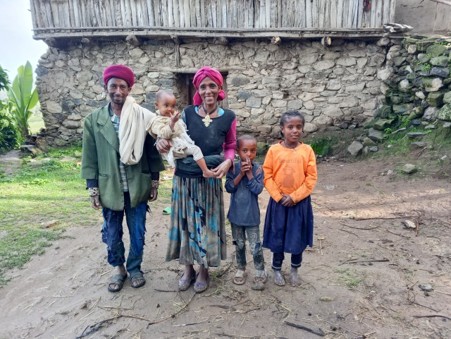
An improved quality of life
“Before the water point was repaired, fetching enough water for cooking, drinking, and washing was a real ordeal,” recalls Ms. Kassanesh Ayaliew, a mother of four from the region.
Her words echo the experience of many women in her community:
“It was all the more frustrating because every day I walked past a broken water pump. I prayed that someone would fix it! Now, I can fetch drinking water in just a few minutes. The restoration of the community water point has changed our lives,” she exclaims.